
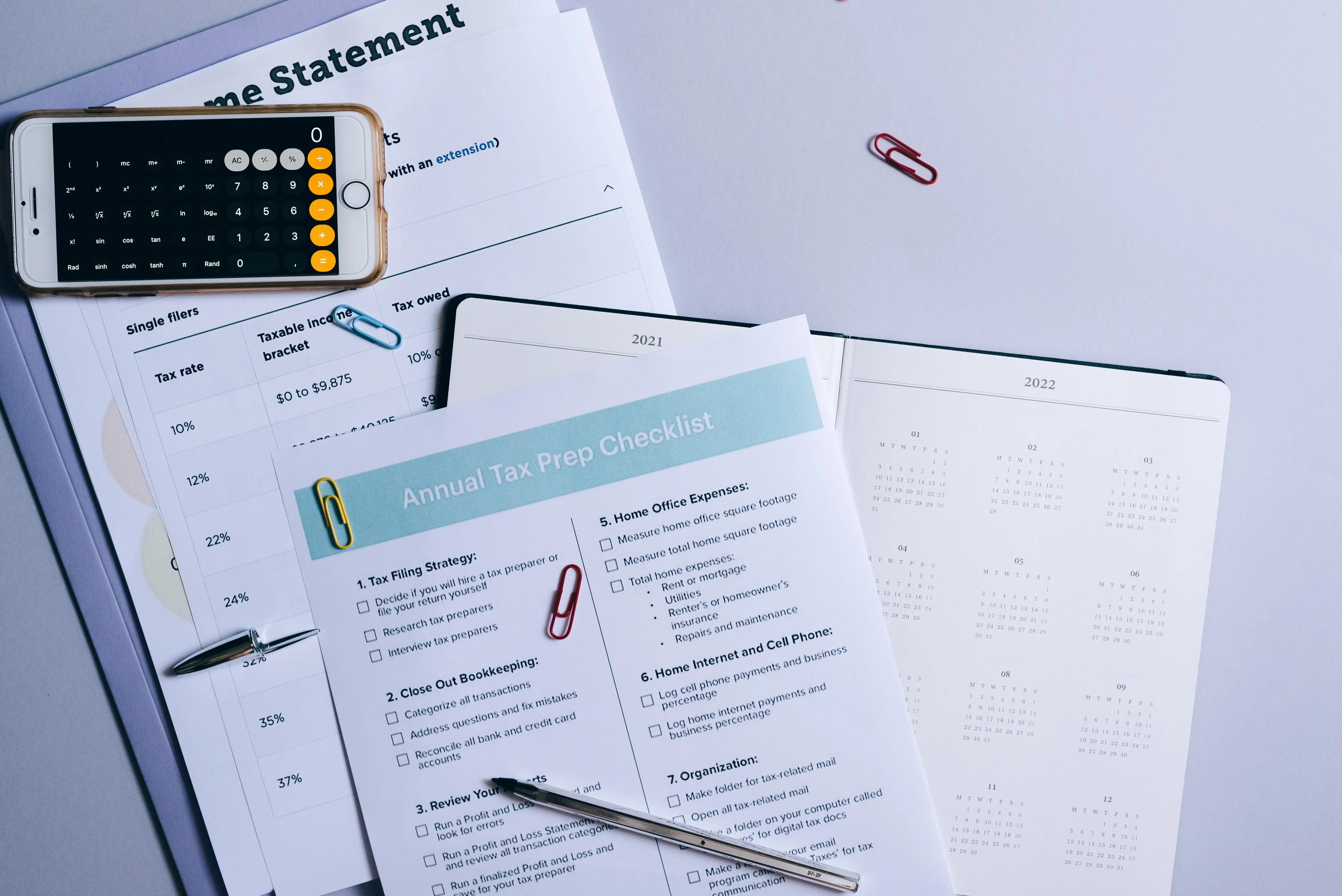
As 2026 comes to an end, business owners in Katy, Houston and other Texas cities have an important opportunity to get ahead of the 2027 tax season. Whether you own a construction company, a restaurant, a retail store or a professional services business, organizing your finances now can make preparing your tax return easier.
Business tax preparation in Texas involves more than gathering receipts in January. It also means reviewing your income, expenses, accounting records and the tax responsibilities that apply to your company. This guide focuses on the 2026 tax year, for which returns are generally filed in 2027.
1. Why prepare before the end of 2026?
Waiting until tax season can leave you searching for missing documents, correcting incomplete records and resolving accounting issues close to filing deadlines. Preparing early helps you better understand your business performance and evaluate decisions you can still make before the year ends.
- Identify outstanding invoices, receipts and supporting documents.
- Review your company's profitability and correct accounting discrepancies.
- Estimate the resources you may need to meet your tax obligations.
- Consult a professional about year-end decisions appropriate for your circumstances.
Key takeaway: start before December 31. Reconcile your accounts, organize your expenses, review contractor payments and confirm your business's federal and state obligations.
2. Organize your business income and expenses
Compare transactions in your business bank accounts and credit cards with customer invoices and accounting records. If you receive payments through Stripe, PayPal, Square, Zelle, checks or cash, record each transaction appropriately.
Not all deposits are taxable income. Loans, owner contributions and transfers between accounts may receive different accounting treatment. Payment platforms may also deduct fees before depositing funds, so the net deposit does not always represent the full sale amount.
- Income and accounts receivable
Gather invoices, payment receipts, platform reports and outstanding balances. Review when each item of income should be recognized under your accounting method.
- Expenses and accounts payable
Organize receipts, vendor invoices, fees and outstanding obligations. Distinguish business expenses from personal expenses.
- Financial statements
Update your profit and loss statement and balance sheet. If you carry inventory, also review inventory levels and costs under the applicable rules.
3. Gather the documents your tax preparer will need
The documents you need depend on your activities, business structure and tax classification. Use this list as a starting point for your next consultation:
- EIN, formation documents and prior-year tax returns, when applicable.
- Bank statements, credit card statements and income records.
- Invoices, receipts and supporting documents for business expenses.
- Financial statements and loan or financing records.
- Payroll records, Forms W-9 and applicable information returns.
- Documentation of equipment, vehicles, assets and inventory.
- Records of estimated tax payments and correspondence from tax authorities.
Keep digital copies in a secure location and organize them by year, month or category. The IRS provides guidance on business recordkeeping.
4. Review potentially deductible business expenses
A business expense generally must be ordinary in your line of work and necessary for operating your business. Deductibility depends on tax rules and documentation supporting the business purpose.
- Operations and technology
Office rent, supplies, utilities, software and subscriptions used in your business activities.
- Marketing and professional services
Advertising, websites, accounting, legal services and other eligible professional expenses.
- Insurance, employees and contractors
Certain commercial insurance premiums, wages and payments for services that meet the applicable requirements.
- Vehicles, tools and equipment
Document their business use and acquisition and placed-in-service dates. Specific limits or depreciation rules may apply.
If an expense involves both personal and business use, identify and document the business portion. Meals, vehicles and home office expenses may have additional requirements. Consult the IRS Tax Guide for Small Business and review your circumstances with a professional.
Loyal Services tip: avoid unnecessary purchases solely to claim a deduction. A deduction may reduce taxable income, but it does not mean you recover the entire amount spent.
5. Review employee and contractor payments
If you worked with independent contractors during 2026, gather applicable Forms W-9 and verify their payments. For certain payments for services, the federal Form 1099-NEC reporting threshold increased from $600 to $2,000 beginning in calendar year 2026. Exceptions apply, so review the payment method, payee type and relevant rules.
Issuing a Form 1099 does not automatically make someone an independent contractor: classification depends on the working relationship. If you have employees, review wages, withholdings and Forms W-2 with your payroll provider or tax advisor.
Consult the IRS frequently asked questions about Form 1099-NEC to verify the obligations that apply to your payments.
6. Understand your Texas business tax obligations
Texas does not impose an individual state income tax, but this does not eliminate a business's federal tax responsibilities or state reporting obligations.
- Texas Franchise Tax
For the 2027 report year, the no-tax-due threshold is $2,650,000 in annualized total revenue. Taxable entities at or below the threshold generally do not file a franchise tax report, although they may still need to submit the applicable PIR or OIR.
- Filing deadline
The regular annual deadline is May 15 or the next business day when applicable. In 2027, this moves the regular deadline to May 17. Verify the requirements for your entity.
- Sales and use tax
If you sell taxable products or services, review your permits, records and returns according to the filing frequency assigned to your business.
Review current provisions and thresholds on the official website of the Texas Comptroller.
7. Review your estimated tax payments and business structure
An LLC is a legal structure, but it does not by itself determine how your business is taxed by the IRS. A single-member LLC is generally treated as a disregarded entity for federal income tax purposes, while a multi-member LLC is generally taxed as a partnership, subject to applicable exceptions or tax elections.
Businesses taxed as corporations may have different deadlines and obligations. If you are self-employed or have other income without sufficient withholding, you may need to make estimated tax payments. Review your 2026 payments and consult a professional about whether to adjust upcoming payments. Additional guidance is available in the IRS publication on tax withholding and estimated tax.
If your business has grown, changed ownership or hired employees, the end of the year is a good time to review your structure with a professional. Explore our business consulting services.
8. Year-end tax preparation checklist
Before the 2027 tax season begins, review the following tasks:
- Reconcile business bank accounts and credit cards.
- Organize customer invoices and income records.
- Gather supporting documents for expenses and update your bookkeeping.
- Separate personal and business expenses.
- Review contractor payments, Forms W-9 and payroll records.
- Document purchases of equipment, vehicles and assets.
- Review estimated tax payments and Texas tax obligations.
- Schedule a tax preparation consultation.
9. Common mistakes to avoid
Mixing personal and business transactions, reporting only bank deposits, claiming expenses without supporting documents or ignoring state reports can complicate tax preparation. Another common mistake is assuming that having an LLC eliminates all federal tax obligations.
Reviewing records regularly and seeking guidance before filing deadlines gives you time to resolve questions and prepare more complete information.
10. Frequently asked questions about business taxes in Texas
- When should I start preparing my 2026 taxes?
Before the end of December 2026. Complete your records as account statements and tax forms become available in 2027.
- Do I need to report income if I did not receive a Form 1099?
Yes. Taxable income must be reported under the applicable rules, even if you did not receive an information return.
- Does my LLC need to file reports if it owes no franchise tax?
It may still need to submit an annual information report. Confirm the rules and exceptions that apply to your entity.
- Does an extension allow me to pay later?
Generally, a federal extension allows you to file your return later, but it does not automatically extend the deadline for paying taxes owed.
- Can I deduct my business insurance?
Certain commercial insurance premiums may be deductible depending on the coverage, business use and applicable tax rules.
- Should I prepare documents if my business did not make a profit?
Yes. Even without a profit, you may have filing and reporting obligations based on your tax structure and activities.
11. Prepare your business with Loyal Services
At Loyal Services LLC we understand the challenges of running a business and meeting its tax responsibilities. Our bilingual team in Katy, Texas, can provide guidance on business tax return preparation and help you identify the next step for your company.
Explore our personal and business tax services and start organizing your documents before the 2027 tax season arrives.
This article is for informational purposes and is not a substitute for personalized tax, accounting or legal advice. Rules and obligations may vary depending on your business circumstances.
Ready to prepare your business taxes?
Our bilingual team can guide you through business tax preparation and the documents you need to get started.